
Neurosurgical Instruments
Clear Choice Medical sells new and used neurosurgical instruments, from bipolar and bayonet forceps to dissectors, suction tubes and retractors.
353 products · sorted by price (high to low)






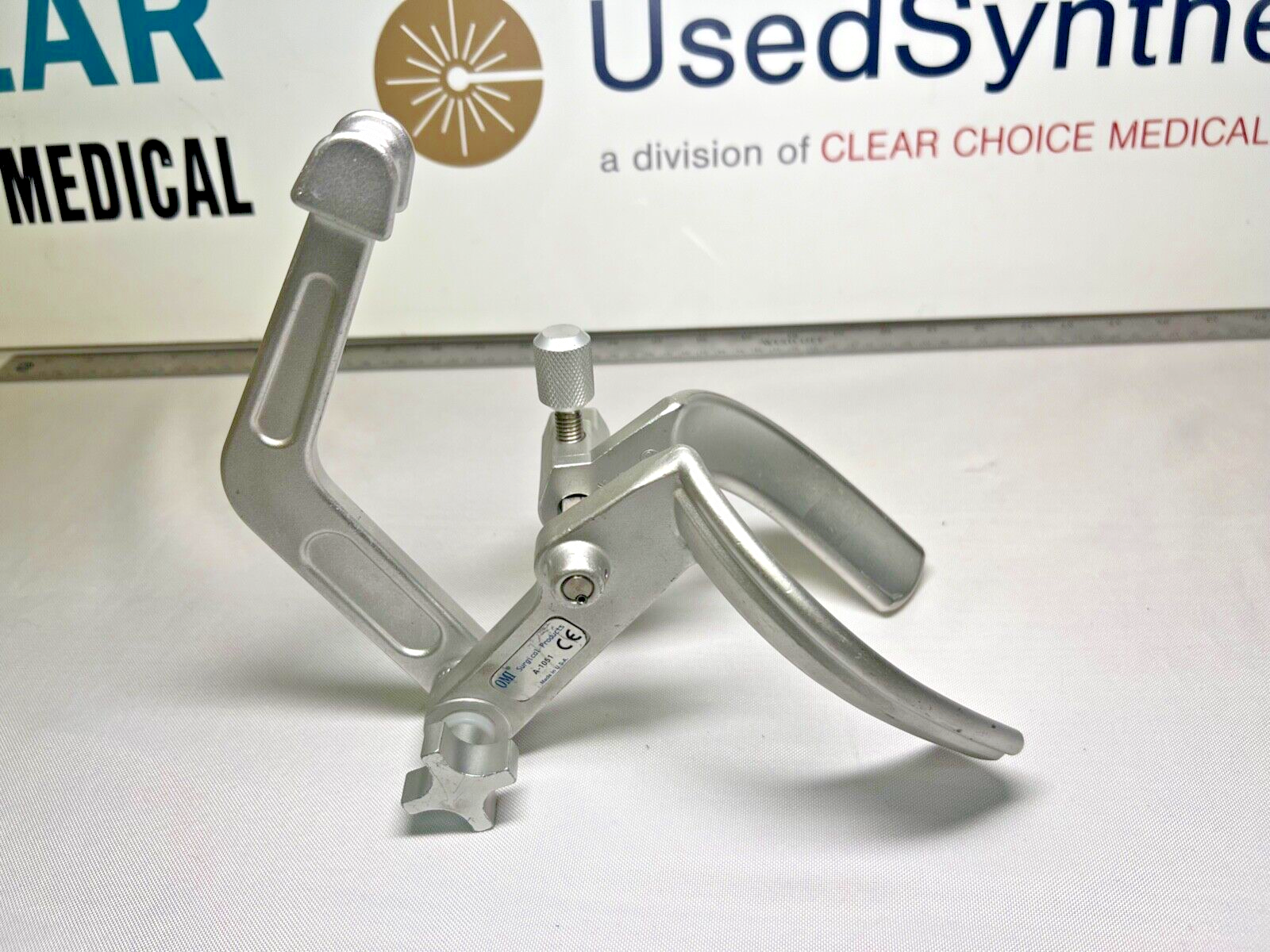


The neurosurgery instruments here include Penfield and Hardy dissectors, Rhoton micro instruments and nerve hooks. Bayonet bipolar forceps appear in insulated, irrigating and non-stick versions. You may also find Frazier suction tubes, cranial rongeurs, micro scissors and needle holders. Greenberg retractor blades and bars are listed as well. Titles carry maker names such as Codman, V. Mueller, Aesculap and Integra. Clear Choice Medical is independent and has no affiliation with any of these makers.
To match neurosurgical tools, compare working length, tip width and whether the shaft is straight or bayonet. Bipolar forceps also differ by tip angle, insulation and the cable connection they accept. Dissectors and nerve hooks vary by tip shape, and titles often state an angle such as 90 degrees. Suction tubes are listed by French size and length. Neurosurgery listings change as items sell, so check the model number in each title before you buy. Browse what is listed now, or contact Clear Choice Medical if you need to match an instrument to your set.
Common questions about Neurosurgery
What do the numbers on Penfield dissectors mean?
The number identifies a specific Penfield pattern, and the patterns differ in curve, length and tip shape. Aesculap lists its series as Fig. 1 to Fig. 5, while the Jarit catalog from Integra writes No. 1 to No. 5. In the Jarit line, No. 2 and No. 3 pair a dissector with a wax packer, one slightly curved and one fully curved. Aesculap's Fig. 3 is curved and double ended at 195 mm, with jaw widths of 3.40 mm and 7 mm. Its Fig. 4 is slightly curved at 205 mm, with a 3 mm blunt jaw and a 90 mm working length. The same numbers also appear on bayonet versions, such as Ruggles-Redmond lumbar Penfield dissectors. Compare the stated tip widths and overall length as well as the number.
What is a self-retaining brain retractor system?
A self-retaining brain retractor system holds its blades on flexible arms fixed to a mount, instead of relying on a handheld retractor. A history of brain retractors published in Neurosurgical Focus describes several designs. The Greenberg system has primary and secondary clamps, flexible rod holders, retractor blades and hand rests. It attaches to a skull clamp. The Leyla retractor came to be attached to the operating table rather than the craniotomy edge. The Budde Halo system uses a circular frame. When you compare listings, check the mounting type and which parts are included. Also check the blade style, such as malleable blades, and any blade widths the title states.
What is a pituitary rongeur, and how are sizes listed?
A pituitary rongeur is a rongeur with small cup jaws at the end of a long shaft. Pattern names include Cushing, Love-Gruenwald, Decker and Spurling. Titles usually state the cup size, the jaw direction and a length. The Miltex catalog from Integra lists a Cushing pituitary rongeur with a 2.2 mm x 10 mm bite in straight, up-angled and down-angled versions. It lists a Love-Gruenwald pattern with a 3 mm x 10 mm bite. Ambler Surgical lists a Decker pattern with 1.5 mm x 5.0 mm cup jaws and a 140 mm working length. Check whether a length figure is the working length or the overall length, since makers state both.